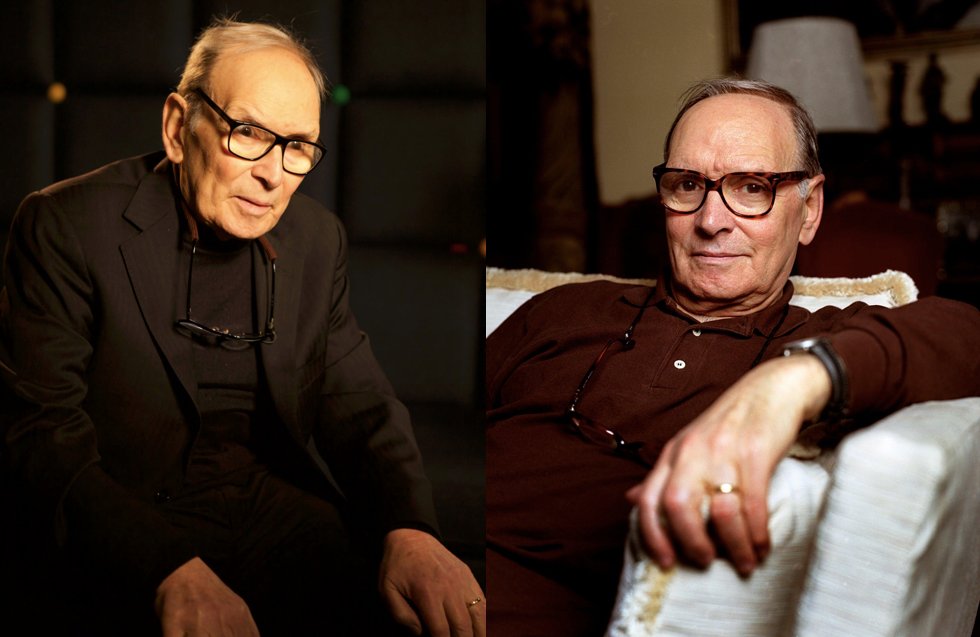
Ennio Morricone biography – Explore the legendary composer’s life, age at death, wife Maria Travia, children, iconic films like “The Good, the Bad and the Ugly,” and lasting musical legacy.
Who is Ennio Morricone?
Ennio Morricone stands among cinema’s most prolific and revolutionary composers, having transformed film music through his innovative soundscapes and unconventional instrumentation. Born on November 10, 1928, in Rome, Italy, this musical genius created over 500 film and television scores alongside more than 100 classical compositions during his seven-decade career.
The maestro’s groundbreaking work with director Sergio Leone on the iconic “Dollars Trilogy” redefined Western film music forever. His haunting whistles, electric guitars, gunshots, and ethereal vocals in “The Good, the Bad and the Ugly” created sounds that continue resonating across generations. Beyond Westerns, Morricone’s versatility shone through diverse genres from horror to romance, earning him two Academy Awards, three Grammy Awards, three Golden Globes, and six BAFTAs.
Morricone passed away on July 6, 2020, at age 91 in his beloved Rome following complications from a fall that fractured his femur. Despite achieving worldwide fame and working extensively in Hollywood, he never left Rome and never learned English, remaining deeply rooted in Italian culture throughout his extraordinary life.
Quick Facts About Ennio Morricone
| Category | Details |
|---|---|
| Full Name | Ennio Morricone OMRI |
| Date of Birth | November 10, 1928 |
| Place of Birth | Rome, Italy |
| Date of Death | July 6, 2020 |
| Age at Death | 91 years old |
| Cause of Death | Complications from fall (femur fracture) |
| Wife | Maria Travia (married 1956–2020) |
| Marriage Duration | 64 years |
| Children | Four (Marco, Alessandra, Andrea, Giovanni) |
| Father | Mario Morricone (trumpet player) |
| Mother | Libera Ridolfi |
| Primary Instrument | Trumpet |
| Height | 5’4″ (1.63m) |
| Film Scores | Over 500 |
| Academy Awards | 2 (1 competitive, 1 honorary) |
Early Life and Musical Beginnings
Ennio Morricone was born in Rome’s Trastevere district on November 10, 1928, into a working-class family steeped in music. His father Mario worked as a trumpet player, providing young Ennio’s first exposure to the musical world. Growing up alongside four siblings—brothers Aldo and Franco, and sisters Adriana and Maria—he witnessed firsthand the dedication required for musical excellence.
At the tender age of six, Morricone composed his first piece of music, demonstrating prodigious talent that would define his lifetime. His father became his first music teacher, imparting lessons on reading music and playing various instruments. The trumpet became his primary instrument, an influence directly from his father’s profession.
His childhood during World War II left lasting impressions on his artistic sensibility. He later recalled falling asleep to the sound of his mother praying the Rosary as bombs fell on Rome, creating an early association between music and narrative that would characterize his film scoring approach.
Education and Classical Training
At age 12, Morricone enrolled at the prestigious Accademia Nazionale di Santa Cecilia (Santa Cecilia Conservatory) in Rome. His exceptional abilities became immediately apparent when he completed a four-year harmony program in just six months, astonishing his instructors with his rapid comprehension and musical maturity.
He studied trumpet under Umberto Semproni while pursuing composition studies with the renowned composer Goffredo Petrassi. This dual focus on performance and composition provided him with comprehensive musical understanding that later distinguished his work from other film composers who often relied on orchestrators.
When he concluded his conservatory studies in 1954, Morricone held diplomas in trumpet, composition, and band instrumentation. This thorough classical training instilled in him respect for musical craftsmanship that lasted throughout his career. Unlike many contemporaries who delegated orchestration duties, Morricone insisted on personally orchestrating every note of his scores.
Revolutionary Partnership with Sergio Leone
Morricone’s collaboration with director Sergio Leone represents one of cinema’s greatest creative partnerships, comparable to Eisenstein and Prokofiev, or Hitchcock and Herrmann. The two had been elementary school classmates in Rome around 1936 but reconnected only in the early 1960s.
Leone hired Morricone for “A Fistful of Dollars” (1964) based on the composer’s song arrangements. That decision revolutionized Western film music forever. Morricone’s spare arrangements featured unorthodox instrumentation—bells, electric guitars, harmonicas, whistles, gunshots, and the distinctive twang of the Jew’s harp—creating soundscapes unlike anything previously heard in cinema.
The “Dollars Trilogy” established new sonic territory: “A Fistful of Dollars” (1964), “For a Few Dollars More” (1965), and “The Good, the Bad and the Ugly” (1966), all starring Clint Eastwood. “The Ecstasy of Gold” from the latter film became so iconic that Metallica has used it as concert opening music since 1983, while The Ramones used it to close their live performances.
Their collaboration continued with “Once Upon a Time in the West” (1968), whose soundtrack sold up to 10 million copies, becoming one of the best-selling original scores ever. Morricone’s last score for Leone came with “Once Upon a Time in America” (1984), featuring a haunting romantic score with his trademark wordless female vocals. Leone died in 1989 while planning a film about the Siege of Leningrad with Morricone attached to compose.
Marriage and Family Life
Ennio Morricone met Maria Travia in 1950 through his sister. Born on December 31, 1932, in Gioiosa Marea, Sicily, Maria moved to Rome with her family when she was one year old. Their love story began in a hospital following a serious car accident that left Maria in a cast from neck to waist.
Morricone remained by her side during her recovery, and as he told SkyTg24, “She was in great pain. I stayed close to her. And so, day by day, drop by drop, I made her fall in love.” They married on October 13, 1956, beginning a partnership that would last 64 years until his death.
Maria became far more than a supportive spouse; she served as his inspiring muse, creative collaborator, and first critic. She authored lyrics for songs in “Cinema Paradiso” and adapted portions of “Once Upon a Time in the West” with her husband. Quentin Tarantino acknowledged their partnership by dedicating “The Hateful Eight” script to “Ennio and Mrs. Maria.”
Their marriage produced four children: Marco (born 1957), Alessandra (born 1961), Andrea (born 1964), and Giovanni (born 1966). Andrea followed his father’s path to become a film composer and conductor, while Giovanni became a filmmaker living in New York City. The Morricone-Travia family always lived in Rome despite Ennio’s international career.
When Morricone received the Honorary Academy Award in 2007, he dedicated it to Maria: “I dedicate this Oscar to my wife Maria who loves me very much, and I love her in the same way, and this award is also for her.” His 2016 competitive Oscar for “The Hateful Eight” was similarly dedicated to “my wife, Maria Travia, my mentor.”
Iconic Film Scores and Masterpieces
Western Soundscapes
Beyond his Leone collaborations, Morricone scored numerous Westerns for directors Sergio Corbucci and Sergio Sollima, solidifying his reputation as the master of Western film music. However, he disliked the term “spaghetti Western” and noted this genre represented only a fraction of his extensive work.
Giuseppe Tornatore Collaboration
Morricone scored all of Giuseppe Tornatore’s films following “Cinema Paradiso” (1988), which won the Academy Award for Best Foreign Language Film. Their decade-long partnership produced memorable scores showcasing Morricone’s romantic sensibilities and melodic gifts.
Hollywood Recognition
From the late 1970s onward, Hollywood directors sought Morricone’s talents. He composed for Brian De Palma’s “The Untouchables” (1987), Roland Joffé’s “The Mission” (1986), Barry Levinson’s “Bugsy” (1991), and Terrence Malick’s “Days of Heaven” (1978). “The Mission” score became one of the most artistically and commercially successful ever, selling over 3 million copies worldwide.
Contemporary Relevance
Quentin Tarantino championed Morricone’s work in modern cinema, using his compositions in “Kill Bill” and “Django Unchained.” Their collaboration on “The Hateful Eight” (2015) finally earned Morricone his first competitive Academy Award at age 87, making him the oldest recipient of a competitive Oscar until James Ivory won in 2018 at 89.
Working Methods and Musical Philosophy
Morricone’s approach to composition distinguished him from contemporaries. He often composed before filming began, working from screenplays rather than completed scenes. This method, used extensively with Leone, allowed music to inform the filmmaking process rather than merely accompanying finished visuals.
He insisted on personally orchestrating all his scores, believing true composers must control every aspect of their music. “Those who actually just write the melody and then hand it on to someone else are not, to me, real composers,” he told NPR.
His unconventional instrumentation became legendary. He incorporated whistles, animal calls, creaks, gunshots, groans, electric guitars, and human voices used as instruments. For “The Good, the Bad and the Ugly,” he called friends asking them to make strange sounds and groans while he conducted them like an orchestra.
Awards and Global Recognition
Morricone’s trophy case reflects his unparalleled impact on film music. He received six Academy Award nominations between 1979 and 2001 before winning the Honorary Oscar in 2007. His competitive Oscar for “The Hateful Eight” came in 2016 at age 87.
His numerous accolades include three Grammy Awards, three Golden Globes, six BAFTAs, ten David di Donatello awards, eleven Nastro d’Argento awards, two European Film Awards, the Golden Lion Honorary Award, and the prestigious Polar Music Prize in 2010.
Artists across all genres paid tribute to his genius. Yo-Yo Ma’s 2004 album “Yo-Yo Ma Plays Ennio Morricone” sold over 130,000 copies. The 2007 tribute album “We All Love Ennio Morricone” featured performances by Sarah Brightman, Andrea Bocelli, Celine Dion, Bruce Springsteen, and Metallica. His albums sold an estimated 50 million units worldwide.
Final Years and Death
Morricone remained creatively active into his late eighties. His collaboration with Tarantino on “The Hateful Eight” demonstrated his continued innovative spirit and musical vitality. He devoted increasing time to classical composition in later years, writing over 50 works for chamber groups, symphony orchestras, and choral ensembles.
On July 6, 2020, the maestro died at a Rome hospital following complications from a fall the previous week that fractured his femur. He was 91 years old. His entire family surrounded him during his final days, and he remained lucid until the end, able to speak with his beloved Maria.
The Italian cultural ministry confirmed his death with a statement calling him “a musician of refined skill who with his melodies has been able to excite and make the whole world dream.” His passing marked the end of an era in film music, leaving behind an incomparable legacy that continues influencing composers worldwide.
Cultural Impact and Musical Legacy
Morricone’s influence extends far beyond cinema. Metallica’s decades-long use of “The Ecstasy of Gold” introduced his music to heavy metal audiences. Hip-hop artist Coolio sampled his themes for the Grammy Award-winning song “Change” in 2009. Bands like Muse, Arctic Monkeys, and The Prodigy have cited his influence or incorporated his music into their work.
His revolutionary approach to film scoring—treating the soundtrack as equal partner to visuals rather than mere accompaniment—transformed how directors conceptualize music’s role in cinema. The spare, innovative instrumentation he pioneered became essential to Western films’ DNA, making post-Morricone Western scores that don’t reflect his influence virtually unimaginable.
His estimated 500+ scores constitute a likely record in Western cinema history. At least a dozen became classics transcending their films: “The Good, the Bad and the Ugly,” “Once Upon a Time in the West,” “The Mission,” and “Cinema Paradiso” among them. These works continue reaching new audiences through concert performances, recordings, and their ongoing presence in popular culture.
Frequently Asked Questions About Ennio Morricone
1. How old was Ennio Morricone when he died?
Ennio Morricone was 91 years old at the time of his death on July 6, 2020, having been born on November 10, 1928.
2. Who was Ennio Morricone married to?
He was married to Maria Travia from October 13, 1956, until his death in 2020—a devoted partnership lasting 64 years.
3. How many children did Ennio Morricone have?
Ennio and Maria had four children: Marco (born 1957), Alessandra (born 1961), Andrea (born 1964), and Giovanni (born 1966).
4. What is Ennio Morricone’s most famous composition?
While he composed many iconic pieces, “The Ecstasy of Gold” and the main theme from “The Good, the Bad and the Ugly” remain his most recognized works worldwide.
5. Did Ennio Morricone win an Oscar?
Yes, he won two Academy Awards: an Honorary Oscar in 2007 for lifetime achievement and a competitive Best Original Score Oscar for “The Hateful Eight” in 2016 at age 87.
6. How many film scores did Ennio Morricone compose?
Morricone composed over 500 scores for cinema and television during his career, likely a record in Western cinema history.