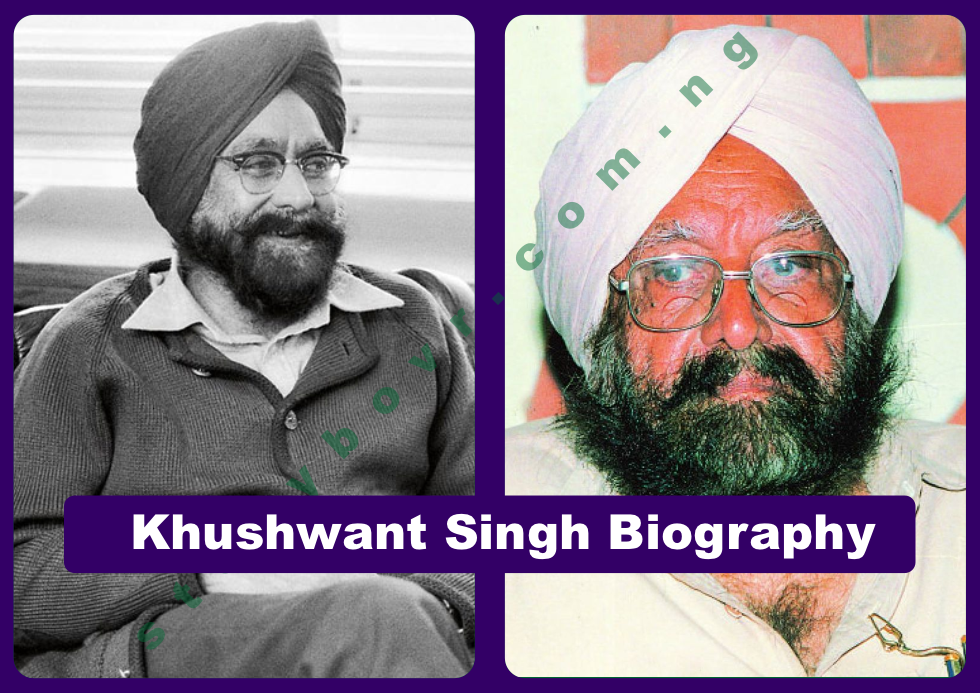
Discover the life of Khushwant Singh (1915-2014), India’s most fearless writer. Learn about Train to Pakistan, his journalism career, and his uncompromising honesty.
Khushwant Singh was a towering figure in Indian literature—a man who wielded his pen like a sword, cutting through hypocrisy, questioning orthodoxy, and challenging the powerful with remarkable courage. Born on February 2, 1915, in Hadali, Punjab (now Pakistan), and passing away on March 20, 2014, in New Delhi, Singh lived nearly a century marked by extraordinary literary output, fearless journalism, and unwavering principles.
I first encountered Singh’s writing in my college years through his masterpiece “Train to Pakistan,” and what struck me wasn’t just the harrowing depiction of Partition—it was his refusal to romanticize or sanitize the brutality. Singh wrote the truth as he saw it, consequences be damned. This authenticity, sometimes uncomfortable but always honest, defined his entire career and made him one of India’s most read and respected writers.
What makes Singh’s legacy enduring is not merely his literary prowess but his moral courage. He returned the Padma Bhushan award in protest, openly criticized religious orthodoxy despite being from a devout Sikh family, and never compromised his voice for popularity or profit. In an era of carefully curated public personas, Singh’s unfiltered honesty feels refreshingly rare.
Key Details Of Khushwant Singh Biography
| Field | Information |
|---|---|
| Full Name | Khushwant Singh (born Khushal Singh) |
| Date of Birth | February 2, 1915 |
| Date of Death | March 20, 2014 |
| Age at Death | 99 years |
| Birthplace | Hadali, Khushab District, Punjab (now Pakistan) |
| Parents | Sir Sobha Singh (Father), Veeran Bai/Lady Varyam Kaur (Mother) |
| Nationality | Indian |
| Occupation | Author, Journalist, Lawyer, Diplomat, Editor, Politician |
| Spouse | Kanwal Malik (m. until her death in 2001) |
| Children | Rahul Singh (son), Mala Dayal (daughter) |
| Education | Modern School Delhi, St. Stephen’s College, Government College Lahore, King’s College London (LL.B.) |
| Notable Works | Train to Pakistan, Delhi: A Novel, A History of the Sikhs |
| Awards | Padma Bhushan (1974, returned 1984), Padma Vibhushan (2007), Punjab Rattan Award (2006) |
| Famous Column | “With Malice Towards One and All” |
Early Life and Background
Khushwant Singh was born into privilege in Hadali, a small village in Punjab’s Khushab District, into a prosperous Khatri Sikh family of the Khurana Clan. His father, Sir Sobha Singh, was a prominent builder who played a crucial role in constructing landmark buildings in Lutyens’ Delhi, including the iconic Sujan Singh Park apartment complex where Khushwant would later reside.
The circumstances of his birth date remain somewhat mysterious—a fitting start for a man who would question everything. His father arbitrarily chose February 2, 1915, for school enrollment purposes, as birth records weren’t systematically maintained then. However, his grandmother Lakshmi Devi insisted he was born in August, leading Singh to later adopt August 15, 1915, as his preferred birth date—coincidentally India’s Independence Day.
Born as Khushal Singh, meaning “Prosperous Lion,” young Singh endured childhood ridicule for his name. Schoolmates would mock him with the chant “Shalee Shoolee, Bagh dee Moolee” (meaning his pet name “Shalee” was a garden radish). This prompted him to change his name to Khushwant at Modern School to match the rhythm of his brother Bhagwanth’s name—an early example of his pragmatic approach to life’s challenges.
Education and Academic Journey
Singh’s formal education began at Modern School in Delhi in 1920, India’s first coeducational institution, where he studied until 1930. It was here he met Kanwal Malik, his future wife, who was one year his junior. Despite his later literary fame, Singh was far from an exemplary student—his academic performance was subpar except in English and geography. He was, by his own admission, an incorrigible prankster whose antics included presenting a live cobra to his chemistry teacher, an incident he later immortalized in his short story “The Mark of Vishnu.”
From 1930 to 1932, he studied Intermediate Arts at St. Stephen’s College in Delhi before pursuing higher education at Government College, Lahore, where he earned his Bachelor of Arts degree in 1934—admittedly with a third-class degree. Undeterred by this modest academic performance, Singh traveled to England to study law at King’s College London, earning his LL.B. from the University of London in 1938. He was subsequently called to the bar at the prestigious Inner Temple in London.
Career Journey and Major Achievements
Legal Career (1939-1947)
Singh began his professional life as a practicing lawyer in 1939 at the Lahore High Court, working in the chambers of Manzur Qadir and Ijaz Husain Batalvi. For eight years, he honed his advocacy skills alongside colleagues who would become lifelong friends. However, the tumultuous events of 1947 would redirect his career trajectory entirely.
Diplomatic Service (1947-1951)
Upon India’s independence, Singh joined the Indian Foreign Service. He served as Information Officer for the Government of India in Toronto, Canada, and later as Press Attaché and Public Officer for the Indian High Commission in London and Ottawa. This four-year stint exposed him to international perspectives and refined his understanding of mass communication.
Journalism and Mass Communication (1951-1956)
In 1951, Singh made a decisive career pivot, leaving diplomacy for journalism. He joined All India Radio, where he produced English-language programs and worked alongside acclaimed Bengali author Nirad C. Chaudhuri. Between 1954 and 1956, he worked with UNESCO’s Department of Mass Communications in Paris, experiences that encouraged him to pursue his true passion—literary writing.
Editorial Brilliance (1956-1983)
Singh’s editorial career was nothing short of revolutionary. He founded and edited Yojana, an Indian government journal, from 1951 to 1953. However, his most transformative contribution came during his tenure as editor of The Illustrated Weekly of India from 1969 to 1978. He inherited a publication with what he called a “well-deserved reputation for dull respectability” and completely transformed it. His editorial vision was simple yet bold: to inform, amuse, and irritate readers. Under his leadership, circulation skyrocketed from 65,000 to 400,000—a sixfold increase.
Singh also edited The National Herald and served as editor of the Hindustan Times from 1980 to 1983. After his editorial tenure ended, he continued writing his highly syndicated column “With Malice Towards One and All,” which became one of India’s most widely-read columns, appearing in The Telegraph, Hindustan Times, and several other newspapers.
Political Service (1980-1986)
From 1980 to 1986, Singh served as a member of the Rajya Sabha, the upper house of India’s parliament, representing the literary and intellectual community in legislative affairs.
Literary Legacy and Major Works
Train to Pakistan (1956)
Singh’s magnum opus, “Train to Pakistan,” was inspired by his traumatic firsthand experiences of the 1947 Partition in Lahore. He witnessed communal killings, woke to murderous chants, and had his house seized by violent mobs. The novel projects what critic K.R. Srinivasa Iyengar called “pitiless precision a picture of the bestial horrors on the Indo-Pakistan border region during the terror-haunted days of August 1947.”
The novel received the Grove Press India Fiction Prize in 1956 and was adapted into a film directed by Pamela Rooks in 1998. It remains required reading for anyone seeking to understand Partition’s human cost.
Other Notable Works
- I Shall Not Hear the Nightingale (1959) – A novel exploring Sikh identity during British rule
- Delhi: A Novel (1990) – A sweeping historical narrative of India’s capital
- The Company of Women (1999) – Examining relationships and social dynamics
- A History of the Sikhs (Two Volumes) – Considered the definitive historical account of Sikhism
- Truth, Love and a Little Malice (2002) – His autobiography
- Khushwantnama: The Lessons of My Life (2013) – Reflections on old age, death, sex, poetry, and religion
- The Good, The Bad and The Ridiculous (2013) – His final book, critiquing organized religion
Singh also popularized “Santa Singh and Banta Singh” jokes, creating a cultural phenomenon through his columns and books.
Philosophy and Writing Style
Singh’s writing was characterized by trenchant secularism, razor-sharp humor, and unflinching social commentary. He believed in the power of literature to challenge orthodoxy and provoke thought. His comparisons of Western and Indian social behaviors were laced with acid wit, making complex issues accessible and engaging.
A self-proclaimed agnostic, Singh once declared: “One can be a saintly person without believing in God and a detestable villain believing in him. In my personalised religion, There Is No God!” His 2011 book title “Agnostic Khushwant: There is no God” left no room for ambiguity. He stated clearly: “I don’t believe in rebirth or in reincarnation, in the day of judgement or in heaven or hell. I accept the finality of death.”
Despite—or perhaps because of—his agnosticism, Singh had intimate knowledge of Sikh scriptures and translated religious texts. This paradox exemplified his complex relationship with faith: respectful of tradition but critical of organized religion’s role in fomenting division.
Personal Life and Relationships
Singh married his childhood friend Kanwal Malik, whom he reconnected with while studying law at King’s College London. Their wedding in Delhi was an intimate affair with only Chetan Anand and Iqbal Singh as invitees, though Muhammad Ali Jinnah attended the formal service. The marriage lasted several decades until Kanwal’s death in 2001.
They had two children: Rahul Singh (son) and Mala Dayal (daughter). Singh remained devoted to his family throughout his life. His extended family includes actress Amrita Singh (daughter of his brother Daljit Singh’s son) and actress Tisca Chopra (his grandniece).
Singh lived in Sujan Singh Park near Khan Market in New Delhi—India’s first apartment complex, built by his father in 1945 and named after his grandfather. This residence became synonymous with the writer’s identity.
Awards and Recognitions
| Award | Year | Notes |
|---|---|---|
| Padma Bhushan | 1974 | Returned in 1984 to protest Operation Blue Star |
| Honest Man of the Year | 2000 | Sulabh International |
| Punjab Rattan Award | 2006 | Government of Punjab |
| Padma Vibhushan | 2007 | India’s second-highest civilian award |
| Sahitya Academy Fellowship Award | 2010 | Lifetime literary achievement |
| All-India Minorities Forum Annual Fellowship Award | 2012 | |
| Tata Literature Live Award | 2013 | Lifetime achievement |
Controversies and Principles
Singh’s career was marked by controversy stemming from his unwillingness to compromise principles for popularity. He openly supported Indira Gandhi’s Emergency in 1975, earning him the label “establishment liberal.” However, the anti-Sikh riots following Gandhi’s assassination in 1984 shattered his faith in the political system, though he remained committed to Indian democracy.
His return of the Padma Bhushan in 1984 to protest Operation Blue Star—the Indian Army’s military operation at the Golden Temple that resulted in significant civilian casualties—demonstrated his willingness to sacrifice personal honors for moral stances.
Singh advocated for diplomatic relations with Israel during the 1970s when such positions were unpopular, visiting the country and praising its progress despite India’s reluctance to displease Arab nations.
His controversial 1962 stance at the International Writers Conference in Edinburgh, where he expressed views against homosexuality, remains a blemish on his otherwise progressive legacy. However, Singh never apologized or backed down, stating: “If you write fearlessly and candidly, you have to be prepared to pay the price.”
Impact and Legacy
Khushwant Singh’s influence extends far beyond his books. He transformed Indian journalism, making it acceptable to be provocative, humorous, and irreverent while maintaining intellectual rigor. His column “With Malice Towards One and All” set standards for opinion journalism that remain unmatched.
His works continue to be studied in universities worldwide, particularly “Train to Pakistan,” which provides invaluable insights into one of history’s largest human migrations and its accompanying tragedy. The book ensures that Partition’s horrors are never forgotten.
Singh’s fearless approach to writing inspired generations of journalists and authors to prioritize truth over comfort, authenticity over popularity. His famous quip—”India is beyond statement, for anything you say, the opposite is also true”—captures the complexity he navigated throughout his career.
Interesting Facts
- Name Changes: Changed his name twice—first from Khushal to Khushwant to escape bullying, establishing a lifelong pattern of pragmatic adaptation
- Birth Date Mystery: Had three different birth dates—the official February 2, his grandmother’s claim of August, and his preferred August 15
- Editorial Transformation: Increased The Illustrated Weekly’s circulation sixfold during his editorship
- Santa-Banta Creator: Popularized the famous Santa Singh and Banta Singh jokes
- Lifelong Learning: Published his last book at age 98, just months before his death
- Self-Written Epitaph: Composed his own irreverent epitaph that ended with “Thank the Lord he is dead”
- Religious Paradox: Translated Sikh scriptures while being an outspoken agnostic
- Literary Festival: The annual Khushwant Singh Literary Festival in Kasauli honors his legacy
Conclusion
Khushwant Singh lived nearly a century, but his impact transcends chronological time. He represented something increasingly rare in public life: uncompromising authenticity. Whether you agreed with his views or found them provocative, you could never doubt his sincerity.
What makes Singh’s story truly remarkable isn’t just his literary output or journalistic excellence—it’s his unwavering commitment to truth as he saw it. In an era when writers often hedge, qualify, and self-censor, Singh wrote with the freedom of someone who refused to be constrained by convention or fear of controversy.
His life teaches us that intellectual honesty sometimes requires sacrifice. Returning the Padma Bhushan wasn’t an easy decision, but it was a necessary one for a man who valued principles over prestige. As he himself might have said with characteristic irreverence, what’s the point of honors if they’re purchased through silence about injustice?
Singh passed away on March 20, 2014, at his Delhi residence at age 99, mourned by India’s President, Vice-President, and Prime Minister. He left behind not just books and columns, but a template for how to live as an intellectual in a complex democracy—with courage, humor, and an unwavering commitment to speaking truth to power.
Frequently Asked Questions
Who was Khushwant Singh? Khushwant Singh was one of India’s most celebrated writers, journalists, and public intellectuals who lived from 1915 to 2014. He is best known for his novel “Train to Pakistan” and his fearless journalism that challenged orthodoxy and power.
What is Khushwant Singh’s most famous work? “Train to Pakistan” (1956) is his most acclaimed work, depicting the horrors of India’s Partition. The novel received international recognition and remains essential reading for understanding that historical trauma.
Why did Khushwant Singh return his Padma Bhushan award? Singh returned the Padma Bhushan in 1984 to protest Operation Blue Star, the Indian Army’s military operation at the Golden Temple in Amritsar that resulted in significant civilian casualties.
What was Khushwant Singh’s religion? Though born into a Sikh family, Singh was a self-proclaimed agnostic who questioned organized religion while maintaining deep respect for Sikh culture and history. He authored the definitive “History of the Sikhs” despite his personal agnosticism.
What were Khushwant Singh’s biggest achievements? His achievements include writing “Train to Pakistan,” transforming The Illustrated Weekly of India, authoring over 100 books, receiving the Padma Vibhushan, serving in Rajya Sabha, and maintaining India’s most widely-read newspaper column for decades while demonstrating uncommon moral courage by returning honors on principle.