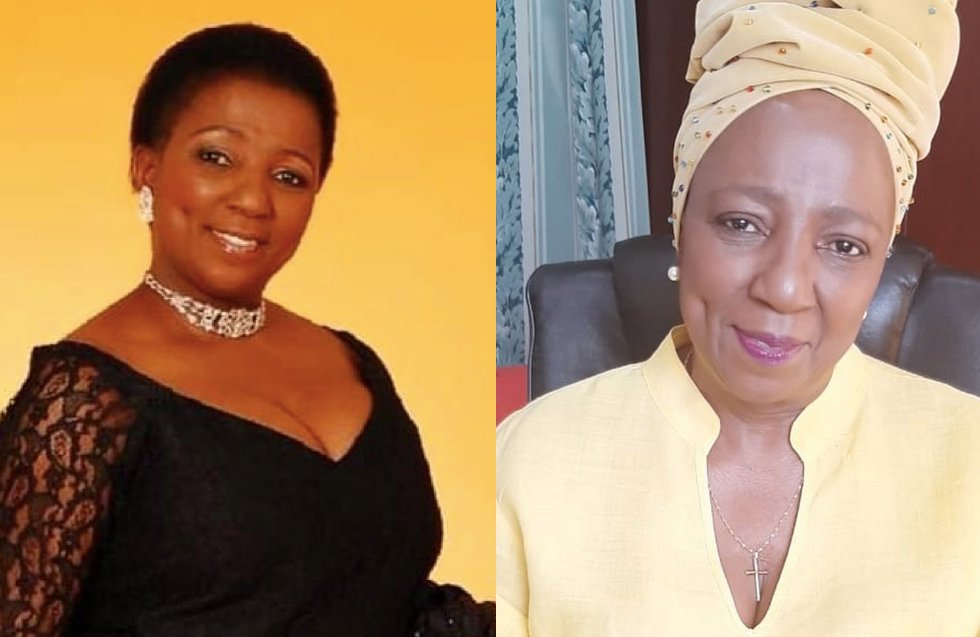
Marah Louw biography explores the South African legend’s age, ex-husband Bill Thomson, daughter Moratuwa, role in The Queen, career spanning 50+ years, and estimated net worth.
Who is Marah Louw?
Marah Louw represents South African entertainment royalty, with a career spanning over five decades in music, theatre, and television. Born Marah Teboho Louw on July 17, 1952, in Mzimhlophe, Soweto, she has evolved from a child choir singer into one of the nation’s most celebrated performers and cultural icons.
At 73 years old in 2025, this remarkable artist has performed for royalty, presidents, and international audiences across continents. Her voice graced the historic 1988 Nelson Mandela 70th Birthday Tribute concert at Wembley Stadium, and she sang at the inaugurations of South African presidents including the legendary Nelson Mandela himself.
Beyond her musical achievements, Marah became a household name through her roles in popular television series like Muvhango, The Queen, and as a judge on Idols South Africa. Her autobiography “It’s Me, Marah” revealed shocking family secrets and intimate details about her personal and professional journey, establishing her as not just an entertainer but a courageous storyteller willing to bare her soul to the world.
Quick Facts About Marah Louw
| Category | Details |
|---|---|
| Full Name | Marah Teboho Louw |
| Other Names | Marah Louw Thomson, Mara Louw (misspelling) |
| Date of Birth | July 17, 1952 |
| Age (2025) | 73 years old |
| Place of Birth | Mzimhlophe, Soweto, South Africa |
| Nationality | South African |
| Ex-Husband | Bill Thomson (married 1986-2004) |
| Daughter | Moratuwa Louw (born April 15, 1970) |
| Biological Mother | Trueblue Mabasotho Louw (raised as sister) |
| Biological Father | Simanda Binca |
| Raised By | Mokgethi Benjamin Louw and Charlotte Macindi Louw (grandparents) |
| First Choir | Imilonji Kantu (joined at age 10) |
| Notable TV Show | The Queen (as Boi Maake, 2016-2017) |
| Idols SA Tenure | Seasons 2-6 (2003-2010) |
| Estimated Net Worth | $700,000 (approximately) |
Early Life and Family Secrets
Marah Louw’s early life story reads like a dramatic screenplay, filled with secrets that shaped her identity for over four decades. Born in the Soweto township of Mzimhlophe on July 17, 1952, she grew up during apartheid-era South Africa, believing that Mokgethi Benjamin Louw, a reverend, and his wife Charlotte Macindi Louw were her parents.
For 44 years, Marah accepted what she believed was her family structure, treating Trueblue Mabasotho Louw as her elder sister. However, the devastating truth emerged when she turned 44: those she called parents were actually her grandparents, and her “sister” Trueblue was, in fact, her biological mother.
This elaborate deception stemmed from the circumstances of her birth. Marah was born out of wedlock after her biological mother Trueblue had a relationship with Simanda Binca from the Eastern Cape. When the relationship ended shortly after Marah’s birth, the family decided to raise her as their own daughter to protect her from social stigma.
The secret remained buried even after Trueblue’s death in 1972. Marah only discovered the truth through her own investigation, documented in her explosive autobiography “It’s Me, Marah.” When she attempted to contact her biological father Binca, seeking answers about her origins, he refused to speak with her or explain the circumstances that led to her being raised by her grandparents.
“Binca is the only one left in the family who knows exactly what happened, yet he still refuses to tell me his version of the story,” Marah revealed in her memoir. Despite this rejection, she has chosen forgiveness and peace, welcoming her half-siblings including Siphokazi Zokwana, whose husband served as South Africa’s Minister of Agriculture, Forestry and Fisheries.
Musical Journey Begins
Marah’s extraordinary musical talent manifested at the tender age of ten when she joined the Imilonji Kantu choir. This early start launched a career that would take her across the globe and onto stages she could never have imagined as a young Soweto girl.
In 1973, she joined Caiphus Semenya’s acclaimed musical production “Meropa,” which became her passport to international recognition. The production toured extensively through Japan, Hong Kong, the Philippines, and London, exposing Marah to diverse cultures and performance traditions that would shape her artistic development.
The pinnacle of this early period came in 1975 when she performed for Queen Elizabeth II at a Royal Command Performance in London. This prestigious honor, typically reserved for the world’s finest entertainers, confirmed that Marah Louw belonged among the elite performers of her generation.
Upon returning to South Africa, she embarked on a successful solo career that took her throughout Southern Africa, performing in Zambia, Botswana, Zimbabwe, Lesotho, Swaziland, and Namibia. Her powerful voice and stage presence made her a sought-after performer for both intimate venues and large concerts.
In 1984, Radio Sotho and Zulu recognized her excellence by naming her Best Female Vocalist, an award that validated her growing reputation. Her repertoire included beloved standards like “Lady is a Tramp,” “New York, New York,” “Wind Beneath My Wings,” and “When a Child is Born,” alongside traditional African songs that showcased her cultural roots.
Anti-Apartheid Activism Through Music
Marah’s most politically significant performance came on June 11, 1988, when she sang at the Nelson Mandela 70th Birthday Tribute concert at Wembley Stadium in London. This massive event, attended by 72,000 people and broadcast to 67 countries, aimed to raise awareness about apartheid and campaign for Mandela’s release from prison.
She sang at the inaugurations of three South African presidents: Nelson Mandela in 1994, Thabo Mbeki, and Jacob Zuma, making her one of the few artists to perform at multiple presidential inaugurations. She also performed at memorial services for anti-apartheid heroes Walter Sisulu and Joe Slovo.
In 1993, she appeared alongside Nelson Mandela during his historic visit to Glasgow, Scotland, performing at George Square and the Royal Concert Hall. Prior to South Africa’s first democratic election in 1994, she toured the United Kingdom with her band, fundraising for the African National Congress through events organized by the Scottish Committee of the Anti-Apartheid Movement.
Her international recognition continued with performances for European royalty, including singing for the Queen of Denmark in 1996 and 1998. In 1995, she performed with Hugh Masekela in Paris and was invited as a guest artist to the Cairo International Song Festival by the Egyptian government.
Theatre and Film Accomplishments
Beyond concerts, Marah established herself as a formidable theatre actress, starring in numerous productions including international classics like “Showboat,” “Fame,” “The Crucible,” and “Hairspray.” She featured prominently in South African musicals including “African Odyssey,” “Baby Come Duze,” and “Nkosi The Healing Song.”
Her involvement with legendary theatre icon Gibson Kente in the 1960s production “Sikhalo” marked her entry into serious dramatic work. Other notable stage productions included “King Kong” and “Nkosi Sikelel’ iAfrika,” which celebrated South African cultural heritage.
One of her proudest achievements came when she translated the music of Disney’s “The Lion King” into Zulu and performed the theme song “Circle of Life” in her native language. This contribution to one of the world’s most successful musicals brought African authenticity to the production and earned her international recognition.
In 2001, she produced “Surf,” a successful musical concert featuring top South African artists including the legendary Hugh Masekela. She later became Executive Producer of “The Sophiatown Musical Experience” and “The Miriam Makeba Tribute to Dorothy Rathebe.”
Her film work included starring in the award-winning feature “Taxi to Soweto,” which explored life in South Africa’s townships. Her stage play “Obaseki” appeared on high school curricula in parts of Nigeria and Nigerian universities.
Television Career and Controversies
Muvhango Years
Marah had a lead role in the groundbreaking SABC2 soap opera “Muvhango” from its inception in the late 1990s until 2004. The show, which incorporated Venda culture and language, became one of South Africa’s most popular television programmes, and Marah’s performance contributed significantly to its success.
Idols South Africa Judge (2003-2010)
From 2003 to 2010, Marah served as a permanent judge on the M-Net reality competition “Idols South Africa” for seasons 2 through 6. Her tenure brought her enormous visibility and popularity with South African audiences who appreciated her honest critiques and musical expertise.
However, her time on Idols ended controversially in October 2010. During an episode filmed on October 1, 2010, and aired on October 3, Marah appeared disoriented, slurring her words and behaving erratically on live television. She cursed on air and refused to comment on contestant Adeline Mocke’s performance.
Initially, both Marah and M-Net attributed her behavior to pain medication for a broken bone in her foot. However, on October 5, 2010, during a Radio 702 interview with John Robbie, Marah admitted to being drunk on air. She later revealed in her autobiography that fellow judge Gareth Cliff gave her a drink containing vodka and Red Bull, which she consumed after taking pain medication, causing the disastrous combination.
The Queen and Industry Blacklisting
In 2016, Marah joined the cast of Mzansi Magic’s hit telenovela “The Queen,” playing the character Boi Maake. The show, produced by Ferguson Films (owned by Shona and Connie Ferguson), became one of South Africa’s most-watched programmes.
However, Marah departed unceremoniously from The Queen in 2017 following disputes over payment. During a POWER Talk panel discussion, she revealed earning R65,000 for Muvhango in 2003, but producers including Shona Ferguson allegedly told her that her fee was “too high.”
“And then suddenly I’m told by Shona Ferguson, who is a child and every other producer that ‘Your fee is too high.’ Excuse me! If you want to pay me peanuts, go and find a monkey,” she stated publicly.
Following her departure, Marah alleged that Ferguson Films blacklisted her from the entertainment industry. “Since I spoke out, I have been blacklisted. I have not worked since 2017. It’s a cruel industry. I have been told by a few producers that they would love to work with me but they have been told that I am impossible to work with and complain about money,” she revealed to Tshisa Live.
Other Television Work
From 2007, she hosted “Mara Louw and Friends” on SABC2, a cooking show where she interviewed celebrities while preparing meals together. In 2010, she starred in the SABC2 sitcom “Skwizas,” about elderly friends at Skywards Retirement Village, though she left after one season.
She appeared in the SABC1 drama series “Tempy Pushas” as Girlie for three seasons (2013, 2015, 2016) and starred in the Mzansi Magic miniseries “Life Father Like Son” in 2013.
Marriage, Divorce and Personal Life
In 1986, Marah married Scottish businessman Bill Thomson, beginning a relationship that would last 18 years. The interracial marriage during South Africa’s apartheid era brought its own challenges, including racist incidents. In her autobiography, she recalled how her husband once went to a bar where someone asked him if he had found her “tail,” reflecting the dehumanizing racism of that period.
Despite these external pressures, the marriage produced one daughter, Moratuwa Louw, born on April 15, 1970 (though some sources indicate she was born when Marah was 17, which would suggest 1969). Moratuwa has remained close to her mother throughout the years.
The marriage ended in divorce in 2004, with Thomson stating he simply did not love Marah anymore. Devastated by this explanation, Marah attempted to save the marriage, involving prominent figures including Abigail Khubeka, Winnie Mandela, and Zindzi Mandela in mediation efforts.
“That is a bit strange. I don’t know how you can just stop loving somebody, especially after so many years. I am very sad, but Satan has taken over. It is so ugly that we are not even talking to each other,” she commented at the time.
Her autobiography also mentions other relationships throughout her life, including choral conductor George Mxadana (her first boyfriend) and musician Thapelo Mofokeng, her boyfriend in the 1970s.
Awards and Recognition
Throughout her illustrious career, Marah has received numerous honors:
- Lifetime Achievement Award (2010) from the National Department of Arts and Culture
- Legend of the Decade Award from the South African Concert Promoters Association (SAMPA)
- Best Female Vocalist (1984) by Radio Sotho and Zulu
- Artes Award for Best Performance with the National Symphony Orchestra in Jo’burg Pops Concerts
- Artes Award nomination for her album “Mara”
- Marah Louw Rose – Ludwig’s Roses dedicated a hybrid tea rose variety in her honor, recognizing her talent and contribution to society
She serves as Goodwill Ambassador for Child Welfare South Africa and co-founded the Soweto-based children’s centre Golden Ark. In 1987, she was elected President of the Musicians Union of South Africa, with Johnny Clegg serving as Vice President.
Net Worth and Financial Standing
Marah Louw’s estimated net worth stands at approximately $700,000, accumulated through decades of album sales, concerts, television appearances, and stage performances. Her peak earning years included simultaneous work on multiple productions, particularly in 2003 when she juggled “Muvhango,” “Fame,” and “Idols South Africa.”
However, her financial situation has been affected by what she describes as industry blacklisting since 2017. “I now live by the grace of God,” she stated when discussing her reduced work opportunities following her departure from The Queen.
Legacy and Cultural Impact
In recognition of her extraordinary contributions to South African culture, Ludwig’s Roses created the “Marah Louw Rose” – a beautiful, strong bicolour rose with deep yellow edged with pink. The company described it as “a fitting tribute to an illustrious career during which Marah Louw, a remarkable South African artist, has performed for European Royalty, African heads of State and Prime Ministers around the world.”
Her autobiography “It’s Me, Marah” has provided inspiration for many South Africans dealing with family secrets and identity issues. By courageously sharing her story, including naming individuals who hurt her and revealing painful truths, she has shown others the power of honesty and forgiveness.
FAQs About Marah Louw
How old is Marah Louw in 2025?
Marah Louw is 73 years old, having been born on July 17, 1952, in Mzimhlophe, Soweto, South Africa.
Who was Marah Louw’s husband?
She was married to Scottish businessman Bill Thomson from 1986 to 2004, a marriage that lasted 18 years before ending in divorce.
Does Marah Louw have children?
Yes, she has one daughter named Moratuwa Louw, born on April 15, 1970, from a relationship during her teenage years.
What role did Marah Louw play in The Queen?
She played the character Boi Maake in the Mzansi Magic telenovela “The Queen” from 2016 until her departure in 2017.
Why did Marah Louw leave Idols South Africa?
She left Idols in 2010 after appearing drunk on live television during an episode filmed on October 1, 2010, which she later admitted was due to consuming alcohol mixed with pain medication.
What is Marah Louw’s net worth?
Her estimated net worth is approximately $700,000, earned through her extensive career in music, theatre, and television spanning over 50 years.