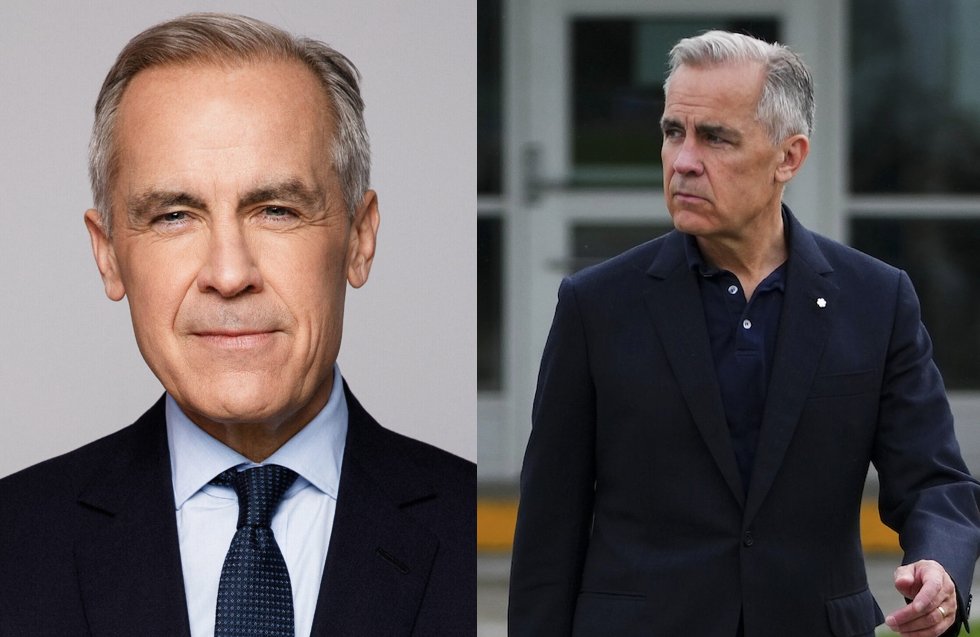
Mark Carney biography – Canada’s 24th Prime Minister’s age, wife Diana Fox, four daughters, remarkable career from Bank of Canada to Bank of England, and complete profile.
Who is Mark Carney?
Mark Joseph Carney made history in March 2025 by becoming Canada’s 24th Prime Minister, capping an extraordinary journey from central banking to political leadership. Born on March 16, 1965, in Fort Smith, Northwest Territories, this 60-year-old economist previously governed both the Bank of Canada (2008-2013) and the Bank of England (2013-2020), making him the first non-British citizen to lead the latter institution since its founding in 1694.
His rise to Canada’s highest political office represents an unusual transition from technocratic leadership to electoral politics. As Governor of the Bank of Canada during the 2008 financial crisis, Carney earned international acclaim for swift policy responses that helped Canada weather economic turbulence better than other G7 nations. His subsequent tenure leading Britain’s central bank through Brexit and early pandemic challenges further cemented his reputation as a crisis manager.
Married to British economist Diana Fox Carney since 1994, Mark is father to four daughters and brings decades of experience spanning Goldman Sachs, international finance, climate advocacy, and economic policy. His government focuses on building Canada’s economy, defending sovereignty amid trade tensions, and uniting Canadians through centrist, technocratic governance.
Quick Facts About Mark Carney
| Category | Details |
|---|---|
| Full Name | Mark Joseph Carney |
| Date of Birth | March 16, 1965 |
| Age (2025) | 60 years old |
| Place of Birth | Fort Smith, Northwest Territories, Canada |
| Current Position | 24th Prime Minister of Canada |
| Political Party | Liberal Party of Canada (Leader since 2025) |
| Parliamentary Seat | Member of Parliament for Nepean |
| Wife | Diana Fox Carney (married 1994) |
| Children | Four daughters (Cleo, Tess, Amelia, Sasha) |
| Father | Robert J. Carney |
| Mother | Verlie Margaret Kemper |
| Education | BA Economics (Harvard), MPhil & DPhil Economics (Oxford) |
| Previous Roles | Governor Bank of Canada, Governor Bank of England |
| Religion | Catholic |
Early Life and Family Background
Mark Carney was born at St. Ann’s General Hospital in Fort Smith, Northwest Territories, the third of four children to Robert J. Carney and Verlie Margaret Kemper. His father served as a high school principal and Professor of Educational Foundations at the University of Alberta, while his mother was a stay-at-home parent who later pursued education studies when Mark was ten.
His family moved to Edmonton’s Laurier Heights neighbourhood when he was six years old. Growing up in Alberta’s capital shaped his Canadian identity and competitive spirit. Three of his four grandparents were Irish immigrants from Aughagower in County Mayo, instilling strong family ties and work ethic.
Mark attended St. Francis Xavier High School in Edmonton, graduating in 1983. During these years, he played hockey as a goalie for Laurier Heights, developing skills and discipline that would serve him throughout life. His athletic commitment demonstrated the focus and resilience that later characterized his professional achievements.
His father’s unsuccessful run as Liberal candidate for Edmonton South in the 1980 federal election exposed young Mark to Canadian politics early. This family connection to public service planted seeds for his eventual political career, though his path would first wind through economics and finance.
Academic Excellence at Harvard and Oxford
Carney earned a partial scholarship to Harvard University, where he pursued economics with financial aid support. Graduating in 1988 with a bachelor’s degree in economics, he was profoundly influenced by lectures from Canadian-born economist John Kenneth Galbraith, who kindled his passion for economic theory and policy.
He continued his studies at the University of Oxford, where he joined St Peter’s College before moving to Nuffield College for doctoral work. In 1993, he earned his MPhil in Economics, followed by his doctorate in 1995. His master’s thesis examined competitive advantage and national champions, while his doctoral research focused on dynamic competition advantages.
His doctoral advisor was Margaret Meyer, with additional guidance from Nobel laureate Jim Mirrlees. At Oxford, Carney co-captained the Oxford University Ice Hockey Club alongside fellow Canadian David Lametti, whom he would later appoint as Canada’s Permanent Representative to the United Nations. These academic and athletic experiences forged lifelong friendships and professional networks.
In 2021, he was elected to Harvard University’s Board of Overseers for a term through 2027, though he resigned in early 2025 when assuming Liberal Party leadership. His academic achievements established the intellectual foundation for his subsequent impact on global economic policy.
Goldman Sachs Career and Financial Expertise
Carney spent thirteen years at Goldman Sachs, working across their Boston, London, New York City, Tokyo, and Toronto offices. His progressively senior positions included co-head of sovereign risk, executive director for emerging debt capital markets, and managing director for investment banking.
His work took him to the frontlines of international finance during pivotal moments. He helped post-apartheid South Africa venture into international bond markets, demonstrating his ability to navigate complex political-economic transitions. He was also deeply involved in Goldman’s response to Russia’s 1998 financial crisis, gaining experience managing systemic risks.
These experiences at one of the world’s premier investment banks provided Carney with practical understanding of global financial markets, risk management, and crisis response. The private sector expertise would prove invaluable when he later confronted the 2008 financial crisis as a central banker.
His international postings exposed him to diverse economic systems and cultural contexts, broadening his perspective beyond North American frameworks. This global outlook became a defining characteristic of his leadership style in both central banking and politics.
Bank of Canada Leadership During Financial Crisis
In 2003, Carney left Goldman Sachs to join the Bank of Canada as deputy governor. One year later, he was recruited to the Department of Finance Canada as senior associate deputy minister, beginning November 15, 2004. From 2004 to 2007, he served as senior associate deputy minister and G7 deputy under two finance ministers: Liberal Ralph Goodale and Conservative Jim Flaherty.
During this period, Carney oversaw the controversial plan to tax income trusts at source and led the federal government’s profitable sale of its 19 percent stake in Petro-Canada. These accomplishments demonstrated his technical expertise and political acumen in implementing difficult policy decisions.
In October 2007, Carney was appointed Governor of the Bank of Canada, officially taking over in February 2008—just as global financial markets began collapsing. Unlike most central bankers, he took immediate action, reducing interest rates by 0.5 percentage points months before other countries followed suit.
In April 2009, he promised to hold rates down for at least 12 months to support credit markets and sustain business confidence. This “forward guidance” strategy became his signature approach. As a result, Canada and its banks suffered less than other G7 countries, with Canada returning to pre-recession output and employment levels earlier than peers.
His successful crisis management earned international recognition. He was appointed chairman of the Committee on the Global Financial System at the Bank for International Settlements (2010-2011) and chairman of the Financial Stability Board (2011-2018), giving him influence over global financial regulation.
Historic Bank of England Governorship
UK Chancellor George Osborne stunned observers in November 2012 by announcing Carney would succeed Mervyn King as Bank of England governor—the first non-Briton appointed to the position since the bank’s founding in 1694. He officially took over July 1, 2013, after departing the Bank of Canada on June 1, 2013.
Carney quickly applied his forward guidance strategy, affirming that very low interest rates would be maintained until unemployment fell below specific thresholds. His approach gave markets clarity and confidence during Britain’s economic recovery from recession.
His tenure navigated unprecedented challenges including Brexit referendum fallout, political instability, and the early phase of the COVID-19 pandemic. He extended his originally five-year term to help guide the UK through Brexit uncertainty, finally stepping down in March 2020.
During his Bank of England leadership, he became increasingly vocal on climate finance, warning about the economic risks of climate change and pushing financial institutions to account for environmental impacts. This climate advocacy would later become central to his post-central banking activities.
In 2015, Catholic publication The Tablet named him the most influential Catholic in Britain, reflecting his public profile beyond economic policy. His Bank of England tenure established him as a global figure in both finance and policy circles.
Post-Central Banking Career and Climate Leadership
After leaving the Bank of England in 2020, Carney held multiple prestigious positions bridging public service and private enterprise. He served as vice-chair at Brookfield Asset Management, chair of Bloomberg L.P., and co-chair of the World Bank’s private sector investment lab.
Most significantly, he became the United Nations Secretary-General’s Special Envoy on Climate Action and Finance, using his financial expertise to advocate for sustainable investment and climate-related financial reforms. He launched the Glasgow Financial Alliance for Net Zero at COP26, aiming to accelerate the transition to a low-carbon economy.
His climate work reflected growing conviction that financial systems must account for environmental sustainability. He argued that markets needed better information about climate risks to allocate capital effectively toward green transition.
During this period, Carney also served as informal advisor to Canadian Prime Minister Justin Trudeau on economic recovery post-pandemic, keeping him connected to Canadian policy discussions. This advisory role maintained his profile in Canadian politics ahead of his eventual leadership bid.
Path to Prime Minister
When Justin Trudeau resigned as Liberal leader in January 2025, Carney quickly emerged as a leading candidate despite no previous elected office experience. On January 16, 2025, he announced his candidacy for Liberal Party leadership.
The contest resolved into a two-person race between Carney and Chrystia Freeland, then Deputy Prime Minister. Despite different visions for Canada’s future, the campaign remained cordial—Carney and Freeland were old friends, with Carney serving as godfather to Freeland’s son Ivan.
On March 9, 2025, Carney won leadership in a landslide victory. He became Liberal Party leader and Member of Parliament for Nepean, leading the party into an April 2025 snap election that the Liberals won. He was sworn in as Canada’s 24th Prime Minister in March 2025.
His election represented a remarkable transition from technocrat to politician, with voters apparently valuing his crisis management experience and international credibility amid economic uncertainty and trade tensions.
Carney Government Policies and Priorities
Prime Minister Carney’s government has moved swiftly on multiple fronts. He repealed the federal consumer carbon tax while maintaining other climate policies, responding to public frustration with rising costs. His government relaxed certain environmental regulations to facilitate economic development.
The One Canadian Economy Act aims to reduce interprovincial trade barriers and expedite major infrastructure projects, addressing longstanding economic inefficiencies. His Build Canada Homes agency tackles housing affordability through federal coordination.
His government announced sharp increases in defence spending in response to global security challenges and pressure from allies. Canada formally recognized the State of Palestine, marking a significant foreign policy shift.
Relations with China have improved under Carney’s leadership, with renewed economic dialogue after years of tension. His government continues supporting Ukraine in the Russo-Ukrainian war while managing complex relationships with the United States amid trade disputes.
Marriage to Diana Fox Carney
Mark met British economist Diana Fox while both studied at the University of Oxford in the early 1990s. They connected through the university’s ice hockey teams—he played goaltender for the men’s team while she was one of the stronger forwards on the women’s team.
A longtime friend recalled Mark watching Diana play and asking, “Who’s that person over there?” He was impressed by her hockey skills and they began dating. They married in July 1994 while Mark was finishing his doctoral thesis at Oxford.
Diana, born in 1965, grew up in the United Kingdom and attended Oxford High School before Marlborough College—the same boarding school as Kate Middleton. She earned a degree in Philosophy, Politics and Economics from Oxford, followed by a master’s in agricultural economics and an MA in international relations from the University of Pennsylvania.
Diana is a respected economist specializing in developing nations, environmental issues, and social justice. She has worked as an agricultural researcher in Africa, held senior roles at think tanks including IPPR, and served as executive director of Pi Capital in London. She has authored two books on agricultural service provision and natural resource management.
The Daily Telegraph labeled her an “eco-warrior” in 2012 after she expressed sympathy with the Occupy movement and criticized global financial institutions. She has served on boards of Save the Children, Friends of the Royal Academy, ClientEarth, Shell Foundation, and BeyondNetZero.
Children and Family Life
Mark and Diana have four daughters: Cleo, Tess, Amelia, and Sasha. Cleo, who studies at Harvard University, introduced her father at the Liberal Party leadership convention in 2025, describing him as “focused and principled” as well as “funny and kind.”
The family has lived transatlantic lives following Mark’s career. They initially lived in Toronto before moving to Ottawa’s Rockcliffe Park neighbourhood. In 2013, they moved to London when Mark became Bank of England governor, returning to Ottawa in 2020 after his term ended.
Diana has written about the challenges of raising four daughters while managing her own career and supporting her husband’s demanding roles. “I endeavour to raise my four daughters so that they are full of integrity, kindness and inner strength. That is certainly the hardest of all my jobs,” she stated.
Their daughters have largely remained private, though all have been exposed to international experiences and elite education. The family dynamic balances Mark’s high-profile public roles with Diana’s preference for working behind the scenes on policy and advocacy.
Mark’s younger brother Brian lives in Northern Ireland. His brother-in-law is the 3rd Baron Rotherwick, married to Diana’s sister. These British family connections reflect the transatlantic nature of the Carney household.
Net Worth and Financial Profile
While exact figures are not publicly disclosed, Mark Carney’s net worth derives from decades in high-level finance and public service. His Goldman Sachs career provided substantial earnings, followed by central banking salaries that, while modest compared to private finance, reflected senior public service compensation.
His post-Bank of England roles included lucrative positions: vice-chair at Brookfield Asset Management and chair of Bloomberg L.P. typically command significant compensation in private equity and media sectors. These roles likely increased his wealth substantially.
As Prime Minister, Carney now receives the standard Canadian PM salary of approximately CAD $406,200 annually, plus residence at 24 Sussex Drive (when renovated) or Rideau Cottage, security, transportation, and other official benefits.
His wife Diana’s career as an economist, think tank leader, and board member has also contributed to family finances. Combined, the Carneys likely maintain comfortable wealth accumulated through decades of professional achievement.
Political Ideology and Leadership Style
Carney is characterized as a centrist, technocrat, and “Blue Grit Liberal”—a Liberal with some conservative fiscal sensibilities. His approach emphasizes evidence-based policy, economic growth, and pragmatic solutions over ideological rigidity.
His technocratic background influences his governance style, favoring expert advice and data-driven decisions. Critics worry this approach may lack the political instincts needed for partisan combat and coalition-building in a minority or closely divided Parliament.
He speaks French but has described his proficiency as “far from perfect.” His Catholic faith influences his values, though he governs a secular liberal democracy. He supports Arsenal FC (influenced by his wife) but also cheers for the Edmonton Oilers and Edmonton Elks, maintaining connections to his Alberta roots.
Carney completed the 2015 London Marathon in 3:31:22, marking a 17-minute improvement on his 2011 Ottawa Marathon time, demonstrating personal discipline and competitive drive. These athletic pursuits reflect his broader approach to challenges—methodical preparation and sustained effort.
Honors and Recognition
Carney has received numerous honors throughout his career, including Officer of the Order of Canada (OC) in 2014 and the Queen Elizabeth II Diamond Jubilee Medal in 2012. He is a Freeman of the City of London.
He holds honorary Doctor of Laws degrees from the University of Manitoba (2013), University of Alberta (2016), and University of Toronto (2018), recognizing his contributions to economics and public service.
His leadership during the 2008 financial crisis earned him international acclaim, with many economists crediting his swift action for Canada’s relatively strong performance. His Bank of England tenure, while more controversial due to Brexit complexity, still garnered respect for crisis management under unprecedented circumstances.
FAQs About Mark Carney
1. How old is Mark Carney?
Born on March 16, 1965, Mark Carney is currently 60 years old as of 2025.
2. Who is Mark Carney’s wife?
He is married to Diana Fox Carney, a 59-year-old British-Canadian economist and climate policy expert whom he met at Oxford University in the early 1990s; they married in July 1994.
3. How many children does Mark Carney have?
Mark and Diana have four daughters: Cleo (who attends Harvard University), Tess, Amelia, and Sasha.
4. What was Mark Carney’s job before becoming Prime Minister?
He served as Governor of the Bank of Canada (2008-2013) and Governor of the Bank of England (2013-2020), and later held roles at Brookfield Asset Management, Bloomberg L.P., and as UN Special Envoy on Climate Action and Finance.
5. When did Mark Carney become Prime Minister of Canada?
He was elected Liberal Party leader on March 9, 2025, led the party to victory in the April 2025 federal election, and was sworn in as Canada’s 24th Prime Minister in March 2025.
6. Where was Mark Carney born?
He was born at St. Ann’s General Hospital in Fort Smith, Northwest Territories, though he was raised in Edmonton, Alberta, from age six.