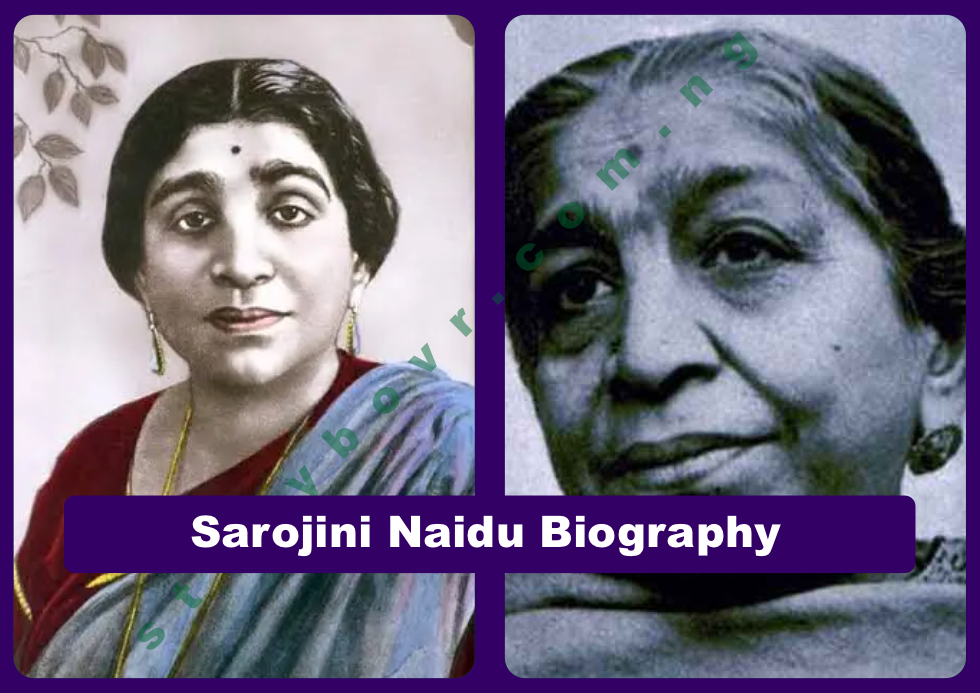
Discover the inspiring life of Sarojini Naidu, India’s “Nightingale,” first woman Congress president, freedom fighter, and poet who transformed Indian independence.
Sarojini Naidu stands as one of India’s most remarkable women—a poet whose verses captured the soul of a nation, a freedom fighter who marched alongside Gandhi, and a political pioneer who shattered glass ceilings in colonial India. Born on February 13, 1879, in Hyderabad, she became the first Indian woman to serve as President of the Indian National Congress and the first woman Governor of an Indian state after independence.
What moves me most about Sarojini Naidu’s story is the beautiful contradiction she embodied—a delicate poet who wrote lyrical verses about love and nature, yet possessed the iron will to lead thousands in nonviolent resistance against one of the world’s most powerful empires. When I read about her leading 2,500 peaceful protesters at Dharasana Salt Works after Gandhi’s arrest, knowing they would be brutally beaten but refusing to raise a hand in defense, I’m reminded that true courage isn’t the absence of fear—it’s acting despite it.
Mahatma Gandhi himself gave her the endearing nickname “Bharat Kokila” or “The Nightingale of India” for the lyrical beauty and patriotic fervor of her poetry. Her life journey from child prodigy to revolutionary leader to state governor remains an inspiration for women everywhere who dare to dream beyond society’s limitations.
Key Details Of Sarojini Naidu Biography
| Field | Information |
|---|---|
| Full Name | Sarojini Naidu (née Chattopadhyay) |
| Date of Birth | February 13, 1879 |
| Date of Death | March 2, 1949 (aged 70) |
| Birthplace | Hyderabad, India |
| Parents | Aghorenath Chattopadhyay (Father), Barada Sundari Devi (Mother) |
| Nationality | Indian |
| Occupation | Poet, Political Activist, Freedom Fighter, Governor |
| Education | University of Madras, King’s College London, Girton College Cambridge |
| Spouse | Dr. Govindarajulu Naidu (m. 1898) |
| Children | Jayasurya, Padmaja, Randheer, Leilamani |
| Notable Titles | First Indian woman Congress President (1925), First woman Governor of United Provinces (1947) |
| Known For | Poetry, Indian independence movement, women’s rights advocacy |
| Nickname | “The Nightingale of India” |
Early Life and Intellectual Awakening
Sarojini was born into a progressive Bengali Brahmin family in Hyderabad. Her father, Aghorenath Chattopadhyay, held a doctorate from Edinburgh University and served as the principal of Nizam’s College, Hyderabad. A radical educationist for his time, he strongly advocated for women’s education—a belief that would shape his daughter’s extraordinary life. Her mother, Barada Sundari Devi, was herself a poetess who wrote in Bengali, providing Sarojini with an early model of female literary achievement.
Growing up in a household steeped in Bengali, Urdu, and English traditions, Sarojini was surrounded by intellectual discourse and cultural richness. She was the eldest of eight siblings, including her brother Virendranath Chattopadhyay, who became a revolutionary leader, and Harindranath Chattopadhyay, who followed in the family’s artistic footsteps as a poet, dramatist, and actor.
A Child Prodigy
Sarojini’s intellectual brilliance manifested early. She demonstrated fluency in multiple languages including Urdu, Telugu, English, Bengali, and Persian. Her father hired private tutors to teach her English, French, and later Persian, recognizing her exceptional abilities.
At the astonishing age of twelve, she passed the matriculation examination of Madras University with first-class honors, ranking at the top of the entire presidency. This achievement was comparable to a modern preteen passing university entrance examinations—a virtually unprecedented accomplishment for a girl in 1891 India. The feat earned her a scholarship from the Nizam of Hyderabad to study abroad.
Even as a teenager, her literary talents were evident. At fourteen, she wrote a play titled “Maher Muneer,” demonstrating the creative genius that would later flourish into celebrated poetry.
Education in England
In 1895, at sixteen, Sarojini traveled to England to pursue higher education—an extraordinary opportunity for an Indian woman of that era. She first attended King’s College, London, where she spent a preparatory year before being formally admitted to Girton College, Cambridge, one of the first women’s colleges at the prestigious university.
Her years in England proved transformative in multiple ways. She became involved in the suffragist movement, gaining firsthand experience in organized political activism for women’s rights. However, life in England wasn’t entirely happy for young Sarojini. She felt uncomfortable with the British tendency to view her as an exotic curiosity, finding herself often quiet and aloof in response to their fascination.
Literary Mentorship
During her time in England, Sarojini met influential literary figures including Arthur Symons and Edmund Gosse, both associated with the Aesthetic and Decadent movements. It was Gosse who provided crucial advice that would define her poetic voice: he encouraged her to embrace Indian themes and imagery in her work rather than simply imitating Western poetry. This guidance helped Sarojini discover her authentic artistic voice—one that would blend Eastern themes with Western poetic forms to create something uniquely her own.
Love and Marriage: Breaking Social Barriers
During her stay in England, Sarojini met Dr. Govindarajulu Naidu (also called Muthyala Govindarajulu Naidu), a non-Brahmin physician from Machilipatnam in Andhra Pradesh. They fell deeply in love—a relationship that would challenge the rigid social norms of their time.
When she returned to India in 1898 at age nineteen, Sarojini made a decision that was considered both groundbreaking and scandalous: she married Dr. Naidu in an inter-caste marriage under the Brahmo Marriage Act of 1872. At a time when inter-caste marriages were virtually unthinkable in Indian society, their union represented a bold rejection of caste hierarchy and a declaration of individual choice over social convention.
Remarkably, both families approved the marriage, which proved to be long and harmonious. The couple had four children together: Jayasurya, Padmaja, Randheer, and Leilamani. Their daughter Padmaja would follow her mother’s footsteps, joining the Quit India Movement and later holding several governmental positions in independent India.
Literary Career: The Nightingale Takes Flight
Published Works and Recognition
Sarojini Naidu’s poetry captured the essence of India—its colors, sounds, emotions, and spiritual depth. Her first collection, “The Golden Threshold” (1905), introduced readers to her distinctive voice that merged vivid Indian imagery with the lyrical quality of English Romantic poetry.
Her subsequent volumes included:
- “The Bird of Time” (1912)
- “The Broken Wing” (1917)
- “The Sceptred Flute: Songs of India” (1928)
- “The Feather of the Dawn” (1961, published posthumously, edited by her daughter Padmaja)
In 1914, she was elected a Fellow of the Royal Society of Literature—a prestigious recognition of her literary achievements. Her poetry explored diverse themes: love, death, separation, patriotism, and the beauty of everyday Indian life. Works like “In the Bazaars of Hyderabad” and “The Palanquin Bearers” remain among her most celebrated pieces, studied in schools across India even today.
The Nightingale’s Song
Gandhi’s nickname for her—”The Nightingale of India”—captured the essential quality of her verse: repetitive, lovely, and filled with imagery that evoked deep emotional responses. Her poems often featured repetitions of lines across stanzas, much like a nightingale’s song, creating a musicality that made her work accessible and memorable.
Yet Sarojini herself remained modest about her gifts. She once wrote: “If I could write just one poem full of beauty and the spirit of greatness, I should be exultingly silent forever; but I sing just as the birds do, and my songs are as ephemeral.”
Journey into Politics and Freedom Fighting
Awakening to the National Cause
While her father had been one of the first members of the Indian National Congress in Hyderabad, Sarojini’s own political awakening came later. The partition of Bengal in 1905 deeply affected her, drawing her into the swelling tide of Indian nationalism. She began meeting regularly with leaders like Gopal Krishna Gokhale, who recognized her intellect and oratory skills and urged her to dedicate these gifts to India’s freedom struggle.
Between 1915 and 1918, Sarojini traveled extensively across India, delivering powerful speeches on youth welfare, dignity of labor, women’s emancipation, and nationalism. Her eloquence and charisma made her an effective advocate for the independence movement.
Champion of Women’s Rights
Sarojini understood that India’s independence struggle could not be separated from women’s liberation. She became deeply involved with the Women’s Indian Association, which she helped establish in 1917 alongside Annie Besant and other prominent leaders. The organization championed female suffrage and empowerment at a time when such ideas were revolutionary.
In 1917, Naidu, Annie Besant, and Herabai Tata led a delegation to meet with Edwin Montagu (Secretary of State for India) and Lord Chelmsford (Viceroy of India) to discuss women’s right to vote. Although the resulting Government of India Act of 1919 initially left the decision to provincial councils rather than granting universal women’s suffrage, it marked an important step forward. Between 1921 and 1930, provincial councils gradually approved women’s franchise, albeit with significant limitations.
Historic Leadership Role
In 1925, Sarojini Naidu achieved a historic milestone: she became the first Indian woman to serve as President of the Indian National Congress. This appointment demonstrated not only her personal influence but also signaled the growing role of women in India’s independence movement.
The Salt Satyagraha: Leading with Courage
Joining the March
The Salt March of 1930 would become one of the defining moments of India’s freedom struggle—and of Sarojini Naidu’s life. When Gandhi initially planned the march, he hesitated to allow women to participate, concerned about the physical demands and high risk of arrest. But Naidu, along with other female activists including Kamaladevi Chattopadhyay and Khurshed Naoroji, persuaded him otherwise. They understood that women’s participation was essential to the movement’s success and to advancing women’s rights within the nationalist cause.
Sarojini joined Gandhi on the 240-mile march from Sabarmati to Dandi. When Gandhi broke the salt laws on April 6, 1930, by making salt from seawater, she famously shouted, “Hail, law breaker!” In a letter to her daughter, she captured the momentous atmosphere: “The little law breaker is sitting in a state of ‘Maun’ [silence] writing his article of triumph… As far as the eye can see there is a little Army—thousands of pilgrims who have been pouring in since yesterday.”
Leading the Dharasana Salt Works Raid
When Gandhi was arrested on May 5, 1930, he appointed Sarojini Naidu as the new leader of the campaign—a profound expression of trust in her leadership abilities. The responsibility fell to her to lead the planned raid on the Dharasana Salt Works on May 21, 1930.
On that fateful day, Sarojini led over 2,500 peaceful protesters toward the salt depot. Before the march began, she addressed them with words that exemplified the movement’s commitment to nonviolence: “Gandhiji’s body is in jail but his soul is with you. India’s prestige is now in your hands. You must not use any violence under any circumstances. You will be beaten but you must not resist: you must not even raise a hand to ward off blows.”
What followed shocked the world. British-led police brutally attacked the unarmed protesters with steel-tipped lathis (clubs). American journalist Webb Miller, who witnessed the scene, reported hearing “the sickening whacks of the clubs on unprotected skulls.” Protesters fell “like ten-pins,” their white clothes stained with blood, yet not one raised a hand in defense. The survivors silently and doggedly marched forward until they too were struck down.
Sarojini and Manilal Gandhi (Gandhi’s son) were arrested. Miller counted 320 injured at the temporary hospital, many with fractured skulls, two dead. His report caused an international sensation, appearing in 1,350 newspapers worldwide and bringing global condemnation upon British colonial policies.
Imprisonment and Sacrifice
For her role in the Salt Satyagraha and subsequent civil disobedience campaigns, Sarojini was arrested multiple times. She spent over 21 months in British jails between 1930 and 1942, enduring harsh conditions but never wavering in her commitment to India’s freedom.
Post-Independence: First Woman Governor
When India finally achieved independence in 1947, Sarojini Naidu’s decades of service were recognized with a historic appointment: she became the first woman Governor of the United Provinces (now Uttar Pradesh), the most politically active state in India.
In this role, she demonstrated that Indian women possessed the statesmanship necessary to lead a nation. She also presided over the Asian Relations Conference in 1947, further cementing India’s place in the emerging post-colonial world order.
Death and Legacy
On March 2, 1949, Sarojini Naidu died of cardiac arrest at the Government House in Lucknow at age 70. She had returned from New Delhi on February 15, and doctors advised her to rest, canceling all official engagements. Her health deteriorated rapidly, and on the night of March 1, she complained of a severe headache. She collapsed following a fit of cough. In her final hours, she asked the nurse attending to her to sing—a fitting end for the woman known as India’s Nightingale.
Enduring Impact
Sarojini Naidu’s legacy extends far beyond her own achievements. She demonstrated that women could excel in poetry, politics, and public service. She showed that the fight for independence and the fight for women’s rights were inseparable struggles. She proved that courage comes in many forms—sometimes as a gentle poem, sometimes as a defiant march into batons and bloodshed.
Contemporary poet Bappaditya Bandopadhyay noted: “Sarojini Naidu inspired the Indian renaissance movement and had a mission to improve the life of Indian women.” This mission continues to resonate today in every Indian woman who pursues education, enters politics, or fights for social justice.
Interesting Facts
- Multilingual Genius: Fluent in Urdu, Telugu, English, Bengali, and Persian by her teenage years
- Teenage Author: Wrote the play “Maher Muneer” at age 14
- Record Breaker: Topped Madras University matriculation exams at age 12—unprecedented for a girl in 1891
- Royal Recognition: Elected Fellow of the Royal Society of Literature in 1914
- International Ambassador: Traveled extensively to the United States and Europe as flag-bearer of Indian nationalism
- Literary Peers: Associated with literary giants including W.B. Yeats, Arthur Symons, and Rabindranath Tagore
- Family of Revolutionaries: Her brother Virendranath was a revolutionary, and another brother Harindranath was a poet and actor
- Google Doodle Honor: Google India commemorated her 135th birth anniversary with a Google Doodle in 2014
- Lasting Words: She famously said, “In the battle for liberty, fear is one unforgivable treachery and despair, the one unforgivable sin”
Conclusion
Sarojini Naidu’s life tells us that greatness comes in many forms. She wielded both pen and protest sign with equal effectiveness, understanding that words can inspire and actions can transform. From the prodigious child who topped university exams at twelve to the gray-haired governor who led a newly independent state, her journey embodied the evolution of India itself—from colonized subject to sovereign nation.
What makes her story truly remarkable isn’t just her list of “firsts”—though those are impressive—but the integrity with which she lived. She refused to choose between being a poet and being a revolutionary, between championing women’s rights and fighting for national independence, between the delicate beauty of verse and the brutal courage of nonviolent resistance. She understood, perhaps better than most, that all these struggles were interconnected threads in the same tapestry of human dignity.
When I think about what we can learn from Sarojini Naidu today, I’m reminded that progress requires people who refuse to accept false choices. She teaches us that you can be both gentle and strong, both artistic and political, both traditional and revolutionary. Her legacy lives on not just in the institutions she led or the poems she wrote, but in every person who dares to be fully themselves while fighting for a better world.
As she once wrote in her own words, speaking of duty and sacrifice: “In the battle for liberty, fear is one unforgivable treachery and despair, the one unforgivable sin.” She lived those words, and in doing so, she helped free a nation.
Frequently Asked Questions
Who was Sarojini Naidu? Sarojini Naidu was an Indian independence activist, poet, and politician who became the first Indian woman to serve as President of the Indian National Congress (1925) and the first woman Governor of an Indian state after independence. She was called “The Nightingale of India” by Mahatma Gandhi for her beautiful poetry.
What is Sarojini Naidu known for? She is renowned for her lyrical poetry that captured Indian life and culture, her leadership in India’s independence movement (particularly leading the Dharasana Salt Works raid in 1930), and her pioneering advocacy for women’s rights and suffrage in India.
What were Sarojini Naidu’s major literary works? Her major poetry collections include “The Golden Threshold” (1905), “The Bird of Time” (1912), “The Broken Wing” (1917), “The Sceptred Flute” (1928), and “The Feather of the Dawn” (1961, posthumous). Her poem “In the Bazaars of Hyderabad” remains one of her most famous works.
Was Sarojini Naidu married? Yes, she married Dr. Govindarajulu Naidu in 1898 in a groundbreaking inter-caste marriage that challenged social norms of the time. They had four children together, including daughter Padmaja who also became active in India’s independence movement.
What were Sarojini Naidu’s biggest achievements? Her major achievements include becoming the first Indian woman Congress President (1925), first woman Governor of an Indian state (1947), leading thousands in the Dharasana Salt Works raid (1930), pioneering women’s suffrage advocacy in India, and creating a body of poetry that defined Indian literature in English for generations.