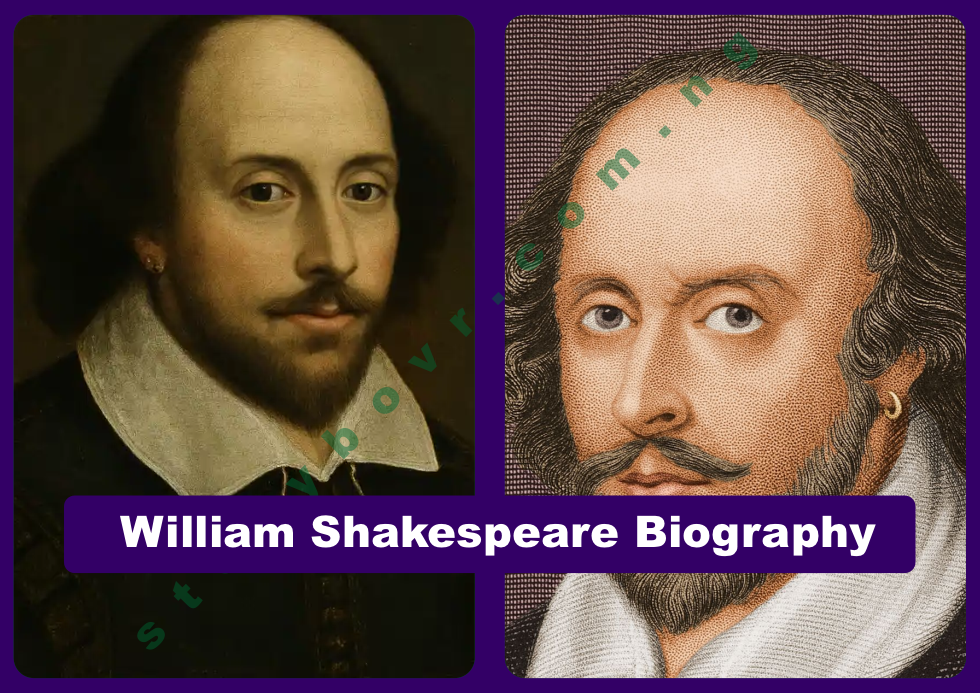
Discover the life of William Shakespeare (1564-1616), England’s greatest playwright. Explore his plays, sonnets, mysterious life, and enduring literary legacy.
William Shakespeare stands as the most influential writer in the English language and arguably the greatest dramatist who ever lived. Born in 1564 in the small market town of Stratford-upon-Avon, this son of a glove-maker would go on to create works that have been translated into every major language and performed more often than those of any other playwright in history.
There’s something profoundly inspiring about Shakespeare’s journey. Here was a man without a university education, from a modest background, who somehow managed to capture the entire spectrum of human emotion with such precision that his words still resonate over 400 years later. When I first encountered Hamlet’s “To be or not to be” soliloquy as a teenager, I was struck by how a writer from the 1600s could articulate the existential questions I was grappling with in my own life. That’s the magic of Shakespeare—his insights into human nature are truly timeless.
His body of work includes approximately 39 plays, 154 sonnets, and several narrative poems. Yet despite his monumental impact on literature, theater, and the English language itself, Shakespeare the man remains somewhat enigmatic, with many details of his personal life lost to history.
Key Details Of William Shakespeare Biography
| Field | Information |
|---|---|
| Full Name | William Shakespeare |
| Nicknames | The Bard of Avon, The Bard, England’s National Poet |
| Date of Birth | April 23, 1564 (traditional date) |
| Baptism Date | April 26, 1564 |
| Date of Death | April 23, 1616 |
| Age at Death | 52 years |
| Birthplace | Stratford-upon-Avon, Warwickshire, England |
| Parents | John Shakespeare (father), Mary Arden (mother) |
| Spouse | Anne Hathaway (m. 1582) |
| Children | Susanna (b. 1583), Hamnet and Judith (twins, b. 1585) |
| Occupation | Playwright, Poet, Actor, Theater Entrepreneur |
| Acting Company | Lord Chamberlain’s Men (later The King’s Men) |
| Famous Theater | The Globe Theatre |
| Number of Plays | Approximately 39 |
| Sonnets | 154 |
| Most Famous Works | Hamlet, Romeo and Juliet, Macbeth, A Midsummer Night’s Dream |
Early Life and Family Background
William Shakespeare was probably born around April 23, 1564, and was John and Mary Shakespeare’s oldest surviving child after losing their first two daughters in infancy. Growing up as the eldest of six surviving children, William had three younger brothers—Gilbert, Richard, and Edmund—and two younger sisters, Anne and Joan.
His father, John Shakespeare, was a successful leatherworker who specialized in making soft white gloves and similar items. A prosperous businessman, John married Mary Arden of the prominent Arden family, and rose through local offices in Stratford, eventually becoming town bailiff—similar to a mayor—when William was five. However, John later stepped back from public life for reasons that remain unknown.
As the son of a leading Stratford citizen, Shakespeare almost certainly attended Stratford’s grammar school, where the curriculum consisted of intense emphasis on Latin classics, including memorization, writing, and acting classic Latin plays. He likely attended until about age 15, receiving a solid foundation in literature and classical drama that would profoundly influence his later work.
Marriage and Family Life
In late 1582, when he was just 18 years old, Shakespeare married Anne Hathaway, who was 26 and already expecting their first child—a fairly common situation at the time. Their daughter Susanna was born in May 1583, followed by twins Judith and Hamnet in early 1585.
The marriage presented interesting dynamics. Anne spent her entire life in Stratford while Shakespeare pursued his theater career in London. While some observers have suggested this separation indicated a strained marriage, pursuing a theater career left Shakespeare no choice but to work in London.
Tragedy struck the family when Shakespeare’s only son, Hamnet, died in 1596 at just 11 years old. This devastating loss coincided with a shift in Shakespeare’s writing toward more complex examinations of mortality and father-daughter relationships, evident in later works like King Lear.
The “Lost Years” and Move to London
One of the great mysteries of Shakespeare’s life involves the period between 1585 and 1592, known as the “lost years.” Various stories have emerged to fill this gap, including tales that he fled Stratford after poaching deer, worked as a schoolmaster, or minded horses for theater patrons in London. The truth remains uncertain.
What we know for certain is that by 1592, Shakespeare had established himself in London’s theatrical scene. His emergence was marked when playwright Robert Greene jealously referenced him in print, calling him an “upstart crow”—clear evidence that the 28-year-old Shakespeare had already gained recognition as both an actor and emerging playwright.
Theatrical Career and Major Achievements
The Lord Chamberlain’s Men
In 1594, Shakespeare became a founding member of The Lord Chamberlain’s Men, a company of actors. This proved pivotal to his success. Unlike most playwrights of his era who sold their work outright, Shakespeare held a stake in the company, which meant he benefited directly from its prosperity.
As the company’s regular dramatist, Shakespeare produced an average of two plays per year for almost twenty years. When King James I ascended the throne in 1603, the company received royal patronage and became known as The King’s Men.
The Globe Theatre
In 1599, a partnership of company members built their own theater on the south bank of the River Thames, which they named the Globe. This iconic venue became synonymous with Shakespeare’s work and hosted the premieres of many of his greatest plays.
Literary Success and Wealth
Shakespeare’s success in the London theaters made him considerably wealthy, and by 1597 he was able to purchase New Place, the largest house in Stratford-upon-Avon. Despite his professional career in London, he maintained close ties with his hometown, eventually retiring there.
His first published works were two long narrative poems: “Venus and Adonis” (1593) and “The Rape of Lucrece” (1594). Both were dedicated to Henry Wriothesley, Earl of Southampton, who may have been Shakespeare’s patron.
The Works: Plays, Sonnets, and Poems
The Plays
Shakespeare’s extant works consist of approximately 39 plays, categorized into comedies, histories, and tragedies. His dramatic output evolved throughout his career:
Early Period (1590-1599): After the plague forced theaters to close, Shakespeare focused on comedies like “The Taming of the Shrew,” “A Midsummer Night’s Dream,” “Much Ado About Nothing,” and “As You Like It.” He also wrote history plays including the “Henry VI” trilogy and “Richard III.”
Middle Period (1599-1608): This era produced his greatest tragedies: “Hamlet” (c. 1600), “Othello” (1604), “King Lear” (1605), “Macbeth” (1606), and “Julius Caesar” (1599). These works showcase his mastery of psychological depth and tragic complexity.
Late Period (1608-1613): Shakespeare’s final works, including “The Tempest” and “The Winter’s Tale,” are often classified as romances or tragicomedies, demonstrating a more philosophical and reconciliatory tone.
Most Performed Plays
According to comprehensive production data, “A Midsummer Night’s Dream” is Shakespeare’s most frequently produced play, accounting for over 7% of all productions, followed by “Hamlet,” “Romeo and Juliet,” and “Macbeth”.
The Sonnets
Shakespeare’s 154 sonnets were composed between 1593 and 1601, though not published until 1609. These poems explore themes of love, beauty, mortality, and time with remarkable depth and technical skill. The sonnets are divided into two groups: sonnets 1-126 address a “fair youth,” while sonnets 127-152 concern the mysterious “Dark Lady.”
Famous sonnets include Sonnet 18 (“Shall I compare thee to a summer’s day?”) and Sonnet 130 (“My mistress’ eyes are nothing like the sun”).
Writing Style and Literary Innovation
Shakespeare employed blank verse extensively in character dialogue, heightening poetic effects through iambic pentameter. He often added rhyming couplets to conclude scenes, providing a sense of closure. His writing featured extensive wordplay, double entendres, and rhetorical flourishes that showcased both his linguistic mastery and his understanding of human nature.
Shakespeare’s genius lay not just in his poetic language but in his profound understanding of character psychology. From the brooding Hamlet to the ambitious Macbeth, from the jealous Othello to the star-crossed Romeo and Juliet, his characters possess a depth and complexity that makes them feel remarkably real.
Final Years and Death
Around 1613, at age 49, Shakespeare appears to have retired to Stratford, though he continued to visit London occasionally. In January 1616, he drew up his will, which famously included the bequest of his “second best bed” to his wife Anne—a detail that has sparked endless speculation about their relationship.
Shakespeare died on April 23, 1616—coincidentally (or traditionally) the same date as his birth—and was buried at Holy Trinity Church in Stratford. The exact cause of his death remains unknown, though he was only 52 years old.
The First Folio and Preservation of His Work
Seven years after Shakespeare’s death, in 1623, John Heminge and Henry Condell—two of his friends and fellow actors in the King’s Men—published the First Folio, titled “Mr. William Shakespeare’s Comedies, Histories and Tragedies”.
This 36-play collection proved crucial to preserving Shakespeare’s legacy. About 18 of his plays, including “Macbeth,” “Twelfth Night,” and “Julius Caesar,” are known to us only because of the First Folio. Without this effort by his friends, nearly half of Shakespeare’s dramatic work might have been lost forever.
Legacy and Cultural Impact
Literary Influence
Shakespeare remains arguably the most influential writer in the English language, and his works continue to be studied and reinterpreted. He contributed countless words and phrases to English, from “break the ice” to “wild goose chase,” from “heart of gold” to “in a pickle.”
Adaptations Across Media
Shakespeare’s plays have inspired countless adaptations across multiple genres and cultures, including 20,000 pieces of music, numerous operas by composers like Verdi, paintings by Romantics and Pre-Raphaelites, and countless films by directors including Akira Kurosawa, Laurence Olivier, and Kenneth Branagh.
Educational Importance
Shakespeare’s works remain central to education systems worldwide. His plays offer students opportunities to explore complex themes including power, love, jealousy, ambition, mortality, and the human condition itself.
The Authorship Question
Some groups, including the Shakespeare Oxford Society, argue that Edward de Vere, the 17th Earl of Oxford, was the true author, citing extensive aristocratic knowledge and education. However, the vast majority of scholars maintain that Shakespeare wrote his own works, noting that other playwrights of the time also came from modest backgrounds and that Stratford’s grammar school provided solid classical education.
The lack of detailed biographical information is actually typical for common-born writers of Shakespeare’s era, making the authorship controversy largely a product of later romanticizing about genius requiring privileged circumstances.
Interesting Facts
- Twin Dates: Shakespeare’s birth and death are both traditionally celebrated on April 23
- Glove-maker’s Son: His father’s profession as a glove-maker likely influenced references to leather and craftsmanship in his plays
- Limited Formal Education: Despite his modest schooling, Shakespeare’s vocabulary exceeded 20,000 words
- Actor and Writer: Shakespeare performed in many of his own plays and those of contemporaries like Ben Jonson
- Property Owner: His wealth enabled him to purchase the second-largest house in Stratford
- No Surviving Manuscripts: Not a single play manuscript in Shakespeare’s handwriting survives
- Coat of Arms: In 1596, his father was granted a coat of arms, making Shakespeare a gentleman
- Lost Son: The death of his only son Hamnet profoundly influenced his later tragic works
Conclusion
William Shakespeare’s life reads like an improbable success story—a provincial glove-maker’s son who became the voice of human experience for all ages. What makes his legacy truly remarkable isn’t merely his artistic achievement, though that alone would be extraordinary. It’s the enduring relevance of his insights into human nature.
Over 400 years after his death, Shakespeare’s characters still speak to us. Hamlet’s indecision, Macbeth’s ambition, Juliet’s passionate love, Lear’s descent into madness—these aren’t museum pieces to be admired from a distance. They’re living reflections of our own struggles, desires, and experiences. Shakespeare understood that beneath the surface differences of time and circumstance, human emotions remain remarkably constant.
Perhaps the greatest testament to Shakespeare’s genius is that each generation discovers something new in his work. His plays have been set in countless time periods and cultures, proving their universal applicability. Whether performed in Elizabethan dress, modern business suits, or as science fiction, the essential truths of his stories remain intact.
The mystery of Shakespeare’s personal life only adds to his mystique, but ultimately, it’s his work that matters. Through his plays and sonnets, we meet a mind of extraordinary empathy and insight—someone who could inhabit the perspectives of kings and fools, lovers and murderers, with equal understanding. In giving voice to the full spectrum of human experience, Shakespeare ensured his own immortality. As long as people love, struggle, dream, and question, the words of the Bard will continue to resonate.
Frequently Asked Questions
Who was William Shakespeare? William Shakespeare was an English playwright, poet, and actor born in 1564 in Stratford-upon-Avon. He is widely regarded as the greatest writer in the English language and wrote approximately 39 plays, 154 sonnets, and several narrative poems.
What is Shakespeare most known for? Shakespeare is best known for his plays, including tragedies like “Hamlet,” “Macbeth,” “Othello,” and “King Lear,” romantic comedies like “A Midsummer Night’s Dream” and “Much Ado About Nothing,” and the tragic romance “Romeo and Juliet.”
How many plays did Shakespeare write? The general consensus is that Shakespeare wrote 39 plays, though the exact number includes some collaborations and contested attributions. He also wrote 154 sonnets and several long narrative poems.
Was Shakespeare married? Yes, Shakespeare married Anne Hathaway in 1582 when he was 18 and she was 26. They had three children together: Susanna and twins Hamnet and Judith.
What are Shakespeare’s biggest achievements? Shakespeare’s greatest achievements include creating timeless dramatic works that have been performed for over 400 years, fundamentally shaping the English language, establishing the Globe Theatre, and producing literary works that continue to influence writers, artists, and thinkers worldwide.